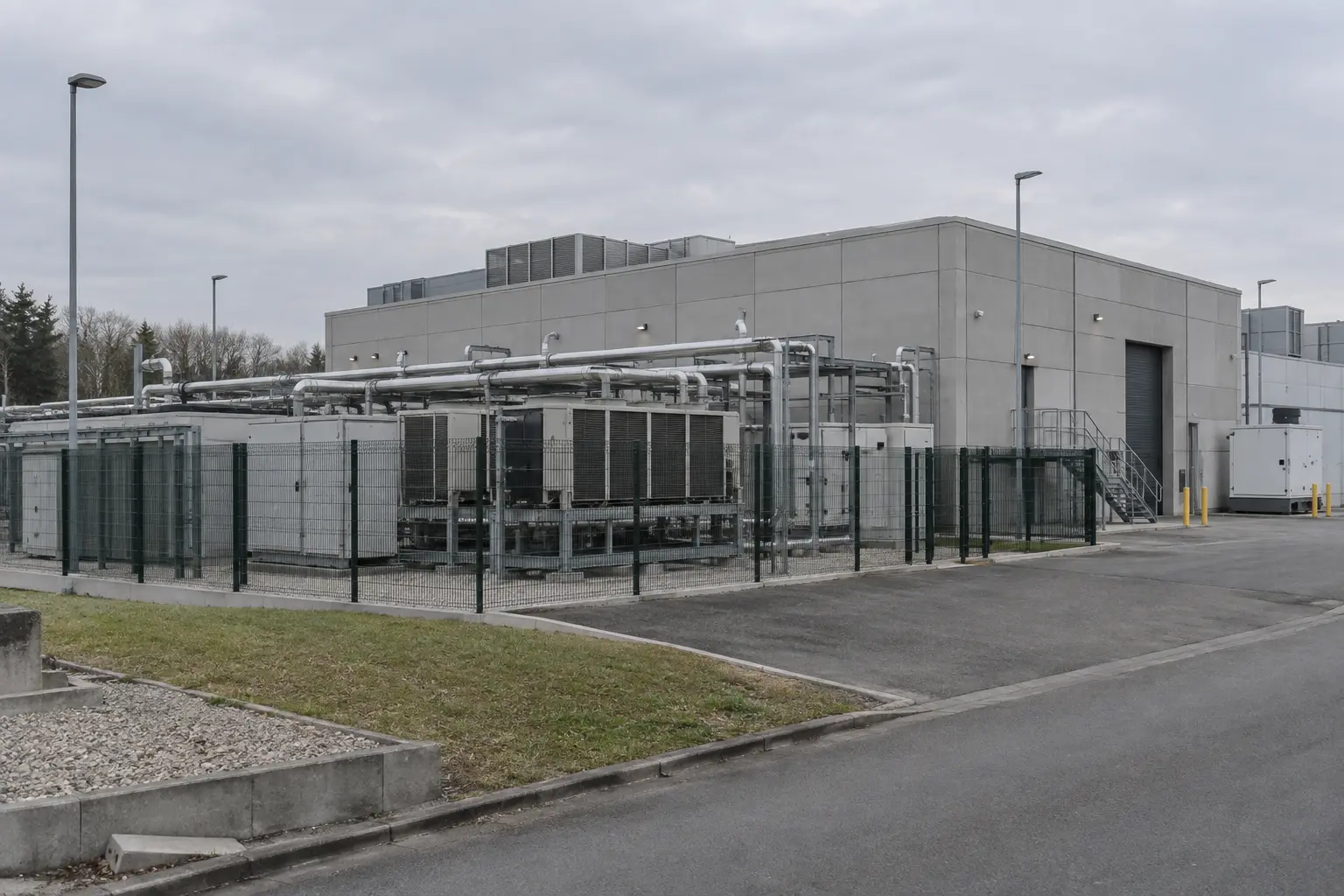

Power availability is a development question
A nearby substation and an energised connection represent very different stages of readiness.

The physical schedule still matters
A site can sit beside a substation and still be a long way from an operating connection. For a project team, that gap affects the schedule; for an investor, it also affects how much capital is needed before revenue starts.
The IEA’s 2025 assessment estimated that, without action on grid risks, around 20% of planned data center projects could face delays. It also identified lengthy transmission development and equipment procurement as constraints. The estimate is a scenario-based warning, not a forecast for every market.
Industry commentary reflects the same tension. In a public LinkedIn post, Guy Massey highlighted the relationship between capital growth and physical constraints, including power and delivery capacity. His commentary provides a practitioner’s perspective; we do not use its headline market figures as verified forecasts.
Ask what is secured
For an investment review, “power available” needs a documentary explanation. It may refer to a preliminary discussion, a study, a conditional offer or an executed connection agreement. These are different levels of evidence.
Confirm the agreed load, delivery stages, required network works, payment milestones and remaining conditions. The question is also one of scope: does the quoted capacity cover the computing equipment alone, or the facility’s total demand? Ambiguous definitions can travel from a presentation into a budget and then into a customer commitment.
Build one dependency schedule
Utility works, site permissions, equipment manufacture, installation and commissioning should appear in a single development schedule. Each dependency needs an owner and a clear basis for its expected completion date.
Phasing can help, but only when the first phase stands on its own commercially and technically. A smaller initial deployment should not quietly rely on later infrastructure to deliver its promised service.
Price readiness rather than proximity
A useful diligence exercise compares two sites using the same evidence categories: rights, power, permissions, connectivity, customer fit and execution plan. This makes the cost of unresolved work easier to see.